Strategic video tagging is one of best ways to get viewers to click on your YouTube videos and continue to generate additional viewers.
YouTube allows you to tag your videos with keywords for Search Engine Optimization.
By properly using relevant keywords and long tail keyword phrases your videos will quickly start showing up in relevant Google searches.
When you initially upload your video to YouTube and for the first week or so that your video is online; keyword tags aren’t really necessary for video optimization.
Instead, you can just use tags to control which of your videos will show up in the YouTube “Related Videos” box.
The idea behind strategic video tagging is to make it as easy as possible for viewers to access all your content and not jump away to “related” content that really has nothing to do with your brand.
Strategic video tagging is the correct selection of a few unique tags that you will use for all of the videos that you initially post on YouTube.
These are unique tags; notobscure tags. There is a difference.
Unique tags are tags that no one else is currently using on any other YouTube video.
When you isolate them and tag your video correctly, you will have full control over the videos that show up as “Related Videos”.
After a few days or weeks when your views start to taper off, it is time to add some additional targeted generic tags to your video.
If you add a few targeted long tailed keyword tags to your videos as they begin to appear in the YouTube and Google search engine results, you will be able to keep your views up.
Although strategic video tagging isn’t a new concept in video marketing; it is currently way under utilized by most of the YouTube publishers online.
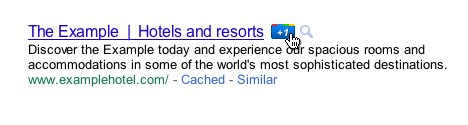
Google announced in late March their sophisticated yet simple idea called the Google Plus One Button +(1) which is in direct competition with the Facebook like button.
The Google Plus One button is aimed at helping to determine what content is most relevant to an individual.
With a single click, the user can indicate which search results they find most useful to them.
It is pretty evident that the Google Plus One button is modeled after Facebook’s “like” button.
Although Google doesn’t have any kind of social network to speak of, Google does have the world’s largest search engine that they can immediately integrate the Google Plus One button with, thereby giving publishers a good reason to implement the button into their web sites.
For the time being, the Google Plus One button is being offered as an experimental service, however there’s no doubt that Google plans on making it a widespread feature.
Right now, over a third of the people using the Internet are on Facebook. This is why their “like” button works so well.
It’s obvious that Google has taken a page out of Facebook’s playbook in order to become more social than they are right now. How successful they become is yet to be determined.
Their Google Buzz failure in the social media sphere doesn’t lend to very high expectations however, given Google’s persistence and some time, they may yet prove themselves by developing a real social network.
One thing is sure, no one can expect Google to generate a whole social network with their Google plus one button immediately. It would be like expecting to harvest a new crop of corn the week after a planting.
Despite the speculation in the technical press that Google is winding down, we don’t believe they will be disappearing any time soon.
The questions that require answering is whether publishers will begin placing the Google Plus One button within their own sites or not, how aggressive Google will be in the implementation of their Plus One button, and how fast the search company will move to provide an add on for publishers.
When it comes to measuring consumers’ interest in content around the web, Google has a long row to hoe before they can even put a dent into Facebook’s massive lead.
However, if Google plans on getting social, the Google Plus One Button appears to be a great first step.
When you are making a decision on whether you should using hyphenated domain names for your website URLs, consider these pros and cons.
First of all, why do people use hyphenated domain names for their website addresses?
We know that hyphenated domain names are inconvenient for many visitors to type into a search engine.
We also know that most people are generally unaccustomed to using hyphenated domain names.
And, when they do type a hyphenated domain name into a search engine, there’s the distinct possibility that the hyphen will be omitted and erroneous search results or perhaps no search will result for the query.
The primary reason why hyphenated domain names are chosen for website URLs, is because the keyword phrase for the website has already been registered by another user.
If you have a website named “Mosquito Lagoon Redfish”, the best possible choice for your domain name would be mosquitolagoonredfish.com.
Since “Mosquito Lagoon Redfish” is a popular search term and the domain mosquitolagoonredfish.com is probably already taken; the second best choice for your domain name could be “mosquito-lagoon-redfish.com” or “mosquitolagoon-redfish.com”.
Keyword rich, search engine optimized, hyphenated domain names, have a greater chance of getting a decent search engine ranking than a non hyphenated domain name that is not search engine optimized.
The disadvantage of using hyphenated domain names is outweighed by the higher search engine ranking you obtain by using proper SEO techniques.
Another reason for this is that a hyphenated domain with a high ranking, will not need to be typed into the search bar by the web searcher.
The high ranking of the hyphenated domain, allows users to simply click on the search engine results listing to access the site.
When you perform a Google search for “Mosquito Lagoon Redfish” and your search engine optimized domain is ranked highly on the Search Engine Results Page; it doesn’t really matter wether your domain names are hyphenated or not.
If the visitors are interested in what the website has to offer, they will bookmark the site for future access. In this scenario, the high ranking of the hyphenated domain outweighs the disadvantages of using a hyphen in the domain name.
Another good reason to use hyphenated domain names, is to enhance user readability.
In many instances, when a long domain name us typed out, it is difficult to read and understand.
In cases like these, a hyphen breaking the words apart, will make the domain name more easily understandable.
In many cases, hyphenated domain names are also better for search engine optimization purposes.
If you believe that the domain name you are after will bring in a lot of web traffic and is already registered; try using hyphens to get the domain name you want.
Otherwise, try to create unique non-hyphenated domain names by including a reference to your name or product.
As an example, you could use the domain “stainedglasssuncatchersbykaren.com” if the domains “staindedglasssuncatchers”, “stained-glass-suncatchers” or “stainedglass-suncatchers” are already spoken for.
The keyword “stained glass suncatchers by karen” will also be easier to optimize and rank higher in the search engine results than “stained glass suncatchers”.
For the most part using hyphenated domain names will not penalize your rankings in Google’s search engine results and will improve the readability of your domain particularly when using long tail keyword phrases.
 Strategic video tagging is one of best ways to get viewers to click on your YouTube videos and continue to generate additional viewers.
 When you are making a decision on whether you should using hyphenated domain names for your website URLs, consider these pros and cons.


