Creating an effective Google AdWords campaign can be challenging for both beginners and experts; especially when you’re not used to Pay Per Click (PPC) advertising.
If you’re not sure of what you’re doing, it’s easy to make mistakes when creating an effective Google AdWords  campaign; some of which can be quite costly.
Fortunately, the internet is filled with information to help you with your PPC campaigns, however, as with anything else on the Internet, you can get some bad advice along with good information.
Here are the some of the most common errors made by PPC marketers, that should help you with creating an effective Google AdWords campaign.
- Excluding keywords from the body of your ads.
Although most of the ads I see have keywords in their headlines, many marketers neglect to place their keywords in the body of their advertisements.
Placing some relevant keywords or phrases, at least once in the body of the ad, makes it more search engine friendly.
- Not initially stating your offer, and funneling your visitors to your landing page.
You might be surprised how many campaign directors, send their visitors to the home page of their main website.
This is a No, No.
This forces visitors to search for the information they should already easily have access to on your landing page.
It also gives visitors a chance to leave your homepage if they decide your site isn’t up to their expectations. You can have the best ads on the Internet, but if your visitors leave before getting to read your ads, what good is it?
Make it super easy for your visitors to access the information that you want them to see.
- Using only the broad match keywords in Google Adwords Keyword Tool.
 Google’s Keyword selection tool is a great aid in finding keywords for your campaign, however, don’t limit it’s use to only the broad match function.
The broad match function is only useful for getting a feel of what is used in your niche market.
You can get more targeted keywords by using those produced from phrase matches and exact matches.
- Continue using keywords that don’t get results.
If your keywords are not producing as expected, devote some effort to finding other more productive keywords for your marketing campaign.
Finding the precise keywords that target your market takes some time; it rarely occurs overnight.
Use the synonym feature in the Google AdWords Selector Tool, to find new, more descriptive keywords.
- Using bland, blah, headlines.
If you can’t give your visitors an interesting headline that catches their attention, you’ve already lost your sale.
Your headline should immediately compel your audience to read your advertisement.
Present the most important benefit that your product or service provides to your potential customer in your headline. This will insure that your viewers read the rest of your ad, and click through it.
Remember that the headline of your ad, is in Carnival terminology, the hook. It should grab your viewer, and pull them in.
Creating an effective Google AdWords campaign that generates tons of traffic and converts well, takes time, but if you avoid making these costly PPC mistakes, you’ll benefit in the end.

Niche marketing can be defined as the purchasing, or selling of a product or service, in a highly specialized market area, where a demand is present.
Broken down into common English, it means that your product is being marketed to the people who are most  interested in purchasing it; not to everyone in the universe!
Large corporations often successfully use niche marketing, as a sales strategy.
For example; Hewlett Packard is a computer company that manufacturers both computers, and accessories.
They could effectively use niche marketing to promote their all in one OfficeJet G80 series all in one machine to the home and small business market and at the same time, promote their single function machines to the larger companies.
Niche marketing is especially attractive to sellers, mainly because their advertising budgets last a lot longer than they would with conventional marketing strategies.
The cost to advertise to a broad market, is obviously much greater than advertising to a specialized niche market.
Successful niche marketing campaigns, are designed to meet the unique requirements of the targeted audiences.
Therefore, in order to be successful, a niche marketer has to tailor their product, to accommodate the unique needs of their potential buyers.
For example; If you author an ebook on how to succeed in your home based internet marketing business, the people who need and are looking for that information, are your niche market.
No one else will be interested in buying your ebook, unless they are contemplating starting a home based internet marketing business.
In a nutshell; Niche marketing is an extremely effective, cost efficient advertising strategy, used to sell specific products, to a specific group of interested buyers.
Maximized SEO requires targeted keyword selection in order to be totally effective.
Because SEO (Search Engine Optimizing) is based on providing your potential customers with quality content, that is 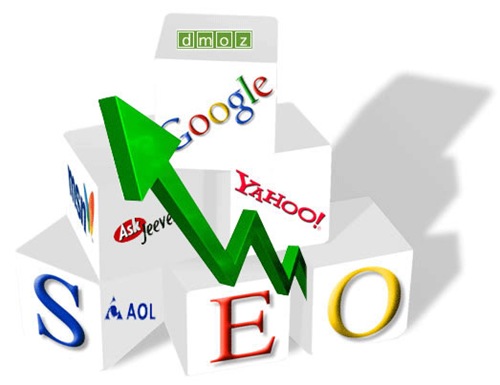 directly related to their search queries, targeted keyword selection is always a primary consideration.
It is imperative that the content found in your website’s web pages, is relevant to what your potential clients are searching for.
In order for SEO to work at all, there has to be a relevant, tangible relationship, between your keywords and the content on your website.
SEO requires targeted keyword selection in order for the search engines to easily trace the keywords, provided by a potential customer in their search query, back to the targeted content in your website.
You can be sure that your website will never be found by potential customers, if the search engines have difficulty tracing the keywords in the search query, with the keywords in your website’s content.
Targeted keyword selection is extremely important for the success of any business, and the selection of the keywords used in your business, can make or break it in your marketing campaigns.
SEO requires targeted keyword selection when you first set up your business website.
This is when your pick a number of targeted keywords that specifically relate to your business in the search engines.
You need to make a list of at least 40 to 50 keywords that your visitors might consider using, to search for your website online.
Include misspellings, different spellings, and other meanings to keywords if applicable in your list; then narrow down your list to keywords and keyword phrases, that are most specifically targeted to your business.
Select the keywords that specifically target your particular consumer niche.
Selecting relevant keywords not only serves to streamline traffic to your website, it also provides your with visitor traffic that is actually interested in purchasing the products or services offered by your business.
Your intended goal, is that when a visitor enters a keyword into the search box, that matches, or is related to one of your targeted business site keywords; a high ranking match to your website, will be displayed in the search engine results page, for only targeted visitors.


